About Me

My photo
Boston, Massachusetts, United States
Listen to the mustn'ts, child. Listen to the don'ts. Listen to the shouldn'ts, the impossibles, the won'ts. Listen to the never haves, then listen close to me... Anything can happen, child. Anything can be. Shel Silverstein

Tuesday, March 8, 2011

Fat Tuesday

When one thinks of Mardi Gras, the usual image of New Orleans, parades, marching bands, beads, purple, green, yellow, king cake, masks, and lots of partying probably come to mind. However, that is not how it started. Having cajun roots, I went to a few true Mardi Gras parades in my youth and definitely have some fun memories with my family, but how Mardi Gras has developed over time is interesting and certainly worth talking about!

The term "Mardi Gras" refers to events of the Carnival celebrations, beginning on or after Epiphany and culminating on the day before Ash Wednesday. Mardi Gras is French for "Fat Tuesday," referring to the practice of the last night of eating richer, fatty foods before the ritual fasting of the Lenten season, which begins on Ash Wednesday. Related popular practices are associated with celebrations before the fasting and religious obligations associated with the penitential season of Lent. Popular practices include wearing masks and costumes, overturning social conventions, dancing, sports competitions, parades, etc. Similar expressions to Mardi Gras appear in other European languages sharing the Christian tradition.

While not observed nationally throughout the United States, a number of traditionally ethnic French cities and regions in the country have notable celebrations. Mardi Gras arrived in North America as a French Catholic tradition with the Le Moyne brothers in the late 17th century, when King Louis XIV sent the pair to defend France's claim on the territory of Louisiane, which included what are now the U.S. states of Alabame, Mississippi, and Louisiana.

The expedition, led by Iberville, entered the mouth of the Mississippi River on the evening of March 2, 1699, Lundi Gras. They did not yet know it was the river explored and claimed for France in 1683. The party proceeded upstream to a place on the west bank about 60 miles downriver from where New Orleans is today, and made camp. This was on March 3, 1699, Mardi Gras, so in honor of this holiday, Iberville named the spot Point du Mardi Gras (French: "Mardi Gras Point") and called the nearby tributary Bayou Mardi Gras. 

In 1723, the capital of Louisiana was moved to New Orleans, founded in 1718. The tradition has expanded to the point that it became strongly associated with the city in popular perception, and embraced by residents of New Orleans beyond those of French or Catholic heritage. Mardi Gras celebrations are part of the basis of the slogan, Laissez le bons temps rouler (Let the good times roll) and the nickname "Big East". Mobile, Alabama, and Biloxi, Mississippi,  the former capitals of New France, also has a long tradition of celebrating Mardi Gras. In the rural Acadiana area, many Cajuns celebrate with the Courir de Mardi Gras, a tradition that dates to medieval celebrations in France.


So whether you partake in the tradition of Lent or not, today is Fat Tuesday,  so eat up!

over and out.


Monday, March 7, 2011

one wedding and a scripture

Last night, Ethan, Sam, and I went to Austin and Lilibeth's wedding. Austin and Lilibeth are our college small group leaders from Austin New Church. When I say small group, I mean it. There are only seven of us, and I absolutely adore it. God has truly blessed us with this small group. Not only has He opened up opportunities to meet other God loving people our own age and build relationships with them, to serve our city with our group, and brought Ethan and I to Austin New Church, but Austin and Lilibeth truly have been the most supportive and inspirational leaders we have the honor of calling our friends. Ethan and I went through a bit of a rough patch in our relationship this past fall and Austin and Lilibeth were there for us 100% and have kept us in their prayers and have been such an awesome example of a fun loving, God honoring, totally in love couple. They have shown us what all of our hard work in our relationship with each other, and more importantly our relationship with God will bring us. We couldn't be more excited for them as they open this next chapter of their lives that God has blessed them with and we are so excited to continue on our own journey with their support behind us.

If I had to pick one thing that I have learned from Austin and Lilibeth over the past months, is that relationships are so so so important. Whether it be with God, Ethan, my family, my friends, strangers, people in need, anyone... It's God's purpose for us to take opportunities to build relationships in His name and truly love people. One of my biggest faults is that I am very shy when I first meet people and sometimes I let that nervousness that someone might not like me prevent me from building a relationship. Or, I let busyness or laziness get in the way of feeding my relationships and its simply not an excuse. I have by no means righted this fault of mine, but I have recognized it and am working towards the goal. My goal to love Ethan as God wants me to love him; my goal to love my family above and beyond what they deserve; my goal to love the friends I have and be outgoing enough to build new friendships; my goal to stop my anxiety from reaching out and loving people as Christ reached out to love me.
I'm not saying that I have this all together, that I have it made. But I am well on my way, reaching out for Christ, who has so wondrously reached out for me. Friends, don't get me wrong: By no means do I count myself an expert in all of this, but I've got my eye on the goal, where God is beckoning us onward—to Jesus. I'm off and running, and I'm not turning back.
Philippians 3:12-14 (Message)

over and out.

Friday, March 4, 2011

Ready to Rant

Okay, I want to rant for a little bit, so for anyone not interested in politics, economics, or education feel free to stop reading right now.

I hope that it is common knowledge that the United States is run on a massive amount of debt. But just like any other debt, the credit will max out eventutually. Unfortunately that max is $14.294 trillion. WOAH, no way we'd ever spend that much right? Wrong. We were at $13 trillion June 2010 and on December 31, 2010 the national debt stood at $14,025,215,218,708.52. That is over a trillion dollars spent in a measely seven months. So, obviously our credit limit is immediately approaching and Washington is frantically trying to decide what programs to cut and what taxes to increase. Great.
https://blogger.googleusercontent.com/img/b/R29vZ2xl/AVvXsEhzLPiMxrUA9nqd-PFXqdwMrwAk-aKVmCbfGI0cXaiwNrt-lIH-9fHUtRqZeTlWJNDNRpqFvl9-t0Q_jttIFkCZzS-FEzVZwKae2gUeafu2BCM82i3Mr2qRUPUCuqfRL4lcNNGiyquPHws/s1600/cow.jpg 
There is currently lots of discussion and the first steps of decision making on what programs will be cut. 45% of our budget goes to Social Security and Medicaid..cutting there? No. 25% of of budget goes to Defense.. cutting there? No. 10% goes to programs such as food stamps and unemployment. But where they want to cut is in the measly 20% percent of the budget that goes everywhere else.
This includes but is not limited to:
-Foreign Aid
-Research and Innovation (Medicine, Alternative Energy, Technology, etc..)
-Education

"All cuts must, therefore, be made in the tiny sliver of the budget where the most valuable programs reside and where the most important investments in our future are made." 
-The Freedom Alliance by David Brooks in the New York Times on February 10th

Senators Saxby Chambliss, Mark Warner, Tom Coburn, Dick Durbin, Mike Crapo, and Kent Conrad are some of the very few senators trying to solve the debt in a better, and more reasonable way.

What upsets me the most about the proposed budget cuts it in the education sector. Of course, I feel that research and development is EXTREMELY important especially in the case of the current energy crisis, and I also am a huge advocate of foreign aid, especially in this time of revolutions sparking all over the globe. But, a strong education system is the only way we can continue to be successful as a country. My generation, and my children's generation have a huge mess to clean up and if my children do not have access to adequate excellent education, then they simply won't be prepared to dig this country out of the current pit we are digging. 

As an aside, I could definitely see why some senators would "support" the cutting of valuable programs because they know that the public will fight it much more than cutting some of the sacred cows. This public disagreement would definitely be a platform on which a vote to raise the debt ceiling could be successful. Not only is raising the debt ceiling without any strong and feasible plan to cut spending ridiculous, but frankly it makes me angry that politicians would play such a game with the citizens of the U.S.

"On NBC's "Meet the Press," Sen. Lindsey Graham (R-S.C.) even threatened to vote against raising the debt ceiling unless Social Security (sacred cow) is reformed.
"This is an opportunity to make sure the government is changing its spending ways," he said. "I will not vote for the debt ceiling increase until I see a plan in place that will deal with our long-term debt obligations starting with Social Security, a real bipartisan effort to make sure that Social Security stays solvent, adjusting the age, looking at means-tests for benefits." 
- Debt Ceiling: The First Big "Showdown"? by Stephanie Condon of CBS News


CBS News Congressional correspondent Nancy Cordes says, "It's practically a political non-starter to cut popular programs like Social Security or Medicare because you know when you are up for re-election, your opponent is going to tout your vote. So while members of Congress do feel they need to make these tough choices - they are reluctant to do it because they know their political future could be on the line." 

In my humble opinion, the job of congress and the president is not to get re-elected, their job is to do what is best for the country. We voted for them (in theory) because we trust our country and our well being in their hands, but if that means being unpopular for a little bit...no way HOSEA.


  1. The U.S. national debt on January 1st, 1791 was just $75 million dollars. Today, the U.S. national debt rises by that amount about once an hour.
  2. Our nation began its existence in debt after borrowing money to finance the Revolutionary War. President Andrew Jackson nearly eliminated the debt, calling it a “national curse.” Jackson railed against borrowing, spending and even banks, for that matter, and he tried to eliminate all federal debt.  By January 1, 1835, under Jackson, the debt was just $33,733.
  3. When World War II ended, the debt equaled 122 percent of GDP (GDP is a measure of the entire economy). In the 1950s and 1960s the economy grew at an average rate of 4.3 percent a year and the debt gradually declined to 38 percent of GDP in 1970.  This year, the Office of Budget and Management expects that the debt will equal 95 percent.
  4. Since 1938, the national debt has increased at an average annual rate of 8.5 percent. The only exceptions to the constant annual increase over the last 62 years were Clinton and Johnson - note that this is the rate of growth - the national debt still existed under both presidents. During the Clinton Presidency, debt growth was almost zero.  Johnson averaged 3 percent growth of debt for the six years he served (1963-69).
  5. When Ronald Reagan took office, the U.S. national debt was just under $1 trillion. When he left office it was $2.6 trillion. During the eight Regan years, the US moved from being the world’s largest international creditor to the largest debtor nation.
  6. The U.S. national debt has more than doubled since the year 2000
    • Under President Bush: at the end of calendar year 2000, the debt stood at $5.629 trillion. Eight years later, the federal debt stood at $9.986 trillion.
    • Under President Obama: The debt started at $9.986 trillion and escalated to $13.7 trillion, a 38 percent increase over two years.
  7. Obama’s most recently proposed budget anticipates $5.08 trillion in deficits over the next five years
  8. The U.S. national debt rises at an average of approximately $3.8 billion per day.
  9. The US government now borrows $5 billion every business day.
  10. A trillion $10 bills, if they were taped end to end, would wrap around the globe more than 380 times.  That amount of money would still not be enough to pay off the U.S. national debt.
  11. In 2010, the U.S. government is projected to issue almost as much new debt as the rest of the governments of the world combined.
  12. Total US government debt as a percentage of GDP is 94 percent in 2010. Greece, the poor step-step sister of the European Union reported debt as percentage of GDP of 115 percent last year.
  13. The U.S. government has such a voracious appetite for debt that the rest of the world simply doesn’t have enough money to lend us.  So now the Federal Reserve is buying most U.S. debt, and the only reason it can do that is because it can create money to lend out of thin air — at the mint’s printing presses!
  14. According to the 2008 Financial Report of the United States Government, an official US government report, the total liabilities of the United States government, including future Social Security and Medicare payments that the U.S. government is already committed to pay out, now exceed $65 TRILLION.
  15. The debt ceiling is the maximum amount of debt that Congress allows for the government. The current debt ceiling is $14.2 trillion, which is expected to be breached by May, 2011, unless lawmakers vote to increase it. The U.S. government’s debt ceiling has been raised six times since the beginning of 2006.
  16. With the exception of fiscal years 1998-2001, from 1969 to today, Congress has spent more money than it collected in revenue, (ran a deficit). Treasury has to borrow money to meet Congress’s appropriations.
  17. In 2009, Federal spending accounted for 24.7 percent of GDP, higher than it’s been in any year since 1949. You have to go back to 1946 to find a higher percentage — 24.8 — and that was a year in which the nation was winding down high rates of spending for World War II. (From 1943 to 1945, the height of the war, federal spending ranged from 41 percent to 43 percent of GDP.)
  18. The U.S. government has to borrow 41 cents of every dollar that it currently spends.
Okay, back to education:

Education cuts are already evident, even here in my own hometown of Austin, Texas. They are firing thousands of teachers across Texas and shutting down hundreds of schools. And the schools they are shutting down are the schools in low income areas, where children need education the most, for more than just educational reasons. Although, these kids will be placed into different schools, a lot of families will simply keep them at home due to the inconvenience of going to school far away from where they live. This, of course, leads to all sorts of important issues, but I want to focus on something different.

The United States is ranked roughly between 25th and 30th educationally when compared on an international scale. That is already ridiculous, putting us behind not only European countries, but a lot of countries with a way smaller budget than we have. The top three countries ranked are Hong Kong, Finland, and South Korea. Hong Kong and South Korea's educational systems are selective and grueling and probably not a great model for the United States, if only for the drastic change that would be. But, Finland's educational system is AWESOME.

Why do Finland's schools get the best results? 

By Tom Burridge
BBC World News America, Helsinki
 

Finland's schools score consistently at the top of world rankings, yet the students have the fewest number of class hours in the developed world.
The Finnish philosophy with education is that everyone has something to contribute and those who struggle in certain subjects should not be left behind.
A tactic used in virtually every lesson is the provision of an additional teacher who helps those who struggle in a particular subject. But the pupils are all kept in the same classroom, regardless of their ability in that particular subject.
Finland's Education Minister, Henna Virkkunen is proud of her country's record but her next goal is to target the brightest pupils.
"The Finnish system supports very much those pupils who have learning difficulties but we have to pay more attention also to those pupils who are very talented. Now we have started a pilot project about how to support those pupils who are very gifted in certain areas.'' 
Primary and secondary schooling is combined, so the pupils don't have to change schools at age 13. They avoid a potentially disruptive transition from one school to another.
Teacher Marjaana Arovaara-Heikkinen believes keeping the same pupils in her classroom for several years also makes her job a lot easier.
''I'm like growing up with my children, I see the problems they have when they are small. And now after five years, I still see and know what has happened in their youth, what are the best things they can do. I tell them I'm like their school mother.''
Children in Finland only start main school at age seven. The idea is that before then they learn best when they're playing and by the time they finally get to school they are keen to start learning.
Less is more


Finnish parents obviously claim some credit for the impressive school results. There is a culture of reading with the kids at home and families have regular contact with their children's teachers.
Teaching is a prestigious career in Finland. Teachers are highly valued and teaching standards are high.
The educational system's success in Finland seems to be part cultural. Pupils study in a relaxed and informal atmosphere.
Finland also has low levels of immigration. So when pupils start school the majority have Finnish as their native language, eliminating an obstacle that other societies often face.
The system's success is built on the idea of less can be more. There is an emphasis on relaxed schools, free from political prescriptions. This combination, they believe, means that no child is left behind.


Everything that makes the Finnish education system successful, from both a performance and quality of life perspective, is not money. Its simply a national pride in their education, their children, and utilizing methods that have proven themselves as effective. Instead of cutting the education budget by simply shutting down schools, firing teachers, and eliminating programs and scholarships, why can't we model our educational system on Finland's and raise a generation that can achieve success for this country and the world instead of raising a minimally educated,  lazy generation that won't have the essential tools to keep this country from drowning.

I would love to hear opinions, for or against my own. I just ask that they be respectable.

over and out.



Thursday, March 3, 2011

Inspired: Picasso

Pablo Diego José Francisco de Paula Juan Nepomuceno María de los Remedios Cipriano de la Santísima Trinidad Ruiz y Picasso, or Picasso as we all seem to know him by was a revolutionary painter that created paitings in which their sole purpose was to question every rule in the art world of his time. Most people can recognize the typical Picasso painting, in the style of the paintings below...
http://www.artquotes.net/masters/picasso/picasso_jacqueline1954.jpghttp://www.moma.org/explore/conservation/demoiselles/images/demoiselles_NewFINAL.jpg 
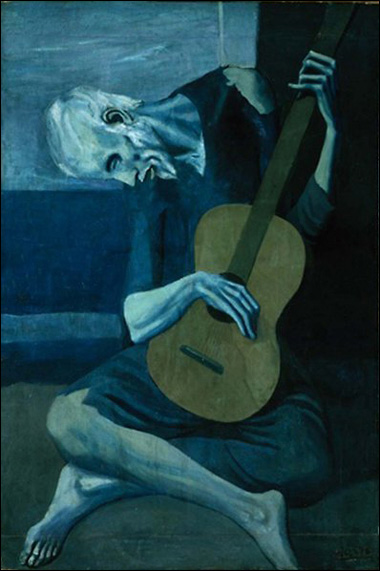
but, Picasso did not start his artistic career painting the painting we recognize as his style today. He developed that style over time and had many differing styles between the beginning and the end of his art career. Personally, my favorite of these is his Blue Period, where all of his paintings were mostly monochromtic blue. They are so expressive, yet simple.
http://emptyeasel.com/wp-content/uploads/2007/06/theoldguitaristbypablopicasso.jpghttp://www.artquotes.net/masters/picasso/picasso_self1901.jpg 
After his Blue Period, he went through what is known as his Rose Period... below is one of his more famous paintings from this time.
 
What I am most suprised and inpired by are his paintings from his youth. He was classicially trained as a painter and had incredible talent and technique that many people do not associate with Picasso.


http://www.artsfairies.com/PICASSO%20PABLO/Pablo%20Picasso%20-%20First%20Communion.JPG 
Picasso was a rebel in every sense of the word and his journey to rebellion is what has inspired me. Yes, of course as someone who loves art and loves drawing/ painting/ photography, I am inspired by his artwork, but mostly I am inspired by is his philosophy on life and how he portrays that through his body of work. Being rebellious is something that is so... alluring to me. I want to question everything and know why..about everything. And if there is something I cannot do, for reasons outside of my own values and beliefs, it makes me want to do it even more. I adore being unique (a much more flattering synonym for weird). Some of my weirdness is inherent to me.. the spelling of my name (Taelor), but most of it comes from two things. One, letting go of the fear of being different, and two, really searching to find the things that I really love in life rather than settling for whats popular. I have learned so much about who I am, about my heart, about my intellect, about my character by going beyond the norm to find my real, true interests. I am nerdy, quirky, romantic, thoughtful... most importantly, I am myself, Taelor, and no one will ever mistake me for anything but that. 

Picasso's first paintings are so beautiful and perfected, but they look like endless other paintings from his time period and even generations before him. It would be next to impossible to pick that painting out of a room of paintings similar and say "that's a Picasso." But, at the end of his career, there would be absolutely no doubt as to which paintings were his due to his incredibly unique style. His Blue and Rose periods were transitional phases whenever he was searching for who he was as an artist and his Blue Period specifically respresented a tough time in his life. What I learn from these periods is that becoming unique and finding out who you are is a transitional process, slowly testing the waters and finding out what makes you different from people around you. Also, although his Blue Period was extremely expressive of a difficult time in his life, it was merely a period rather than a definitition of who he was. Difficult times can definitely affect your characteristics, but it should not define who you are.

The final thing about Picasso that inspires me is that he perfected the norm before rebelling against it. He learned and understood all the accepted rules of art before breaking them. He didn't just naively start being rebellious for the sake of it. 

Here are some quotes!

"Every act of creation is first an act of destruction."
  
"I begin with an idea and then it becomes something else."

"Inspiration exists, but it has to find us working."

"It took me four years to paint like Raphael, but a lifetime to paint like a child."

"My mother said to me, 'If you are a soldier, you will become a general. If you are a monk, you will become the Pope.' Instead, I was a painter, and became Picasso."

"The world today doesn't make sense, so why should I paint pictures that do?"
 
"Some painters transform the sun into a yellow spot, others transform a yellow spot into the sun."


-Pablo Picasso


over and out.


Wednesday, March 2, 2011

Wish List:

Okay, so my 20th birthday is in a mere 10 days and I don't even feel that excited. Normally this close to my birthday, I am super excited and counting down the days. This is probably because I have gone on trips every year for my birthday since I turned 16. I spent 16 in Beverly Hills, 17 in Italy, 18 at a ranch resort and lodge, and 19 in Seattle. This year, on top of turning the boring age of 20, I haven't made any exciting plans. I may or may not go camping.. that's as far as I have gotten. Most of my excitement is pinned on September when Ethan and I will be moving to Angers, France for a semester abroad. So.. to get myself a little amped up, I went on a mini wishlist building extravaganza and found some fun things. I thought it would be fun to share my finds and if anyone wants to send a gift my way on March 13... :P


moss mills milo bracelet - photo 

Dachshund Bracelet 


Canvas Wedges 


Mental Floss Magazine 


http://s.ecrater.com/stores/74726/4be092260d85f_74726b.jpg

 Vintage Polaroid Land Camera Automatic 320 Folding Camera with Leather Case and Manual

 over and out.

to be or not to be: a hero

he·ro

[heer-oh]
–noun

1. a man of distinguished courage or ability, admired for his brave deeds and noble qualities.

2. a person who, in the opinion of others, has heroic qualities or has performed a heroic act and is regarded as a model or ideal.

"What does it mean to be a hero? Is it someone fulfilling an ambition at great personal and physical struggle or is it someone doing something for the good of mankind? And why do we all need heroes - what is it that inspires us about certain people and makes us hold them up as examples of greatness?
The truth is that we look up to people who make a difference to our lives while at the same time overcoming personal struggle and hardship to achieve that goal. We admire their bravery and dedication; we aspire to be as courageous and focused as they are to achieve what they set out to do.
So being a hero isn't necessarily about achievement only. It's the effect that their achievement has on the rest of us and what we can learn from the struggle and hardship they underwent. They are what we could call exemplars - they are people who demonstrate high standards of character and dedication and who inspire us to achieve the highest that we can in order to emulate them.
However, being a hero isn't always front page news or the stuff of films. Being a hero can mean working all the hours under the sun and earning enough to send your children to college so that they can have a better future than you had at their age. It can be as simple as making sure that the elderly people in your area are always warm and well fed, or dedicating yourself to improving community amenities and overcoming all the obstacles that get thrown up in your path.
So you can achieve great things like win an Olympic gold medal by being fast on your feet and become an icon. Or you can achieve great things through strength of character and perseverance, and become a hero. You can doubt your ability to complete the journey, but having the strength of character and purpose to overcome your own fears about completing it - that's the stuff of heroes. That's what inspires others - that you falter and doubt your ability to carry on, but that you then pick yourself up again stronger than before, doubly committed to your goal, and you press on to the end." -Neel Raman

James 4:7-10 (New Living Translation)

 7 So humble yourselves before God. Resist the devil, and he will flee from you. 8 Come close to God, and God will come close to you. Wash your hands, you sinners; purify your hearts, for your loyalty is divided between God and the world. 9 Let there be tears for what you have done. Let there be sorrow and deep grief. Let there be sadness instead of laughter, and gloom instead of joy. 10 Humble yourselves before the Lord, and he will lift you up in honor.

Hebrews 11:25-26 (New Living Translation)

25 He chose to share the oppression of God’s people instead of enjoying the fleeting pleasures of sin. 26He thought it was better to suffer for the sake of Christ than to own the treausures of Egypt, for he was looking ahead to his great reward. 

Colossians 3:5-10 (New Living Translation)

 5 So put to death the sinful, earthly things lurking within you. Have nothing to do with sexual immorality, impurity, lust, and evil desires. Don’t be greedy, for a greedy person is an idolater, worshiping the things of this world. 6 Because of these sins, the anger of God is coming.[a] 7 You used to do these things when your life was still part of this world. 8 But now is the time to get rid of anger, rage, malicious behavior, slander, and dirty language. 9 Don’t lie to each other, for you have stripped off your old sinful nature and all its wicked deeds. 10 Put on your new nature, and be renewed as you learn to know your Creator and become like him. 

Philippians 4:8-9 (New International Version)

 8 Finally, brothers and sisters, whatever is true, whatever is noble, whatever is right, whatever is pure, whatever is lovely, whatever is admirable—if anything is excellent or praiseworthy—think about such things. 9 Whatever you have learned or received or heard from me, or seen in me—put it into practice. And the God of peace will be with you. 

Ephesians 4:1 (New International Version)

1 As a prisoner for the Lord, then, I urge you to live a life worthy of the calling you have received.

Ephesians 4:26 (New International Version)

26 “In your anger do not sin”[a]: Do not let the sun go down while you are still angry.

Romans 15:1-2 (New Living Translation)

1 We who are strong must be considerate of those who are sensitive about things like this. We must not just please ourselves. 2 We should help others do what is right and build them up in the Lord.

Matthew 15:16, 18-20 (The Message)

 16-20Jesus replied, "You, too? Are you being willfully stupid? ...What comes out of the mouth gets its start in the heart. It's from the heart that we vomit up evil arguments, murders, adulteries, fornications, thefts, lies, and cussing. That's what pollutes. Eating or not eating certain foods, washing or not washing your hands—that's neither here nor there." 

Isaiah 53:10 (The Message)

 10Still, it's what God had in mind all along,
   to crush him with pain.
The plan was that he give himself as an offering for sin
   so that he'd see life come from it—life, life, and more life.
   And God's plan will deeply prosper through him.


 over and out.

Thursday, February 24, 2011

I dare you to try it:

Okay, so today I decided to try out a new trend. It isn't really anything I have seen on campus or in magazines lately, but it is something I think is super adorable, and an awesome way to have the "look" of long hair, even when its still growing out. It is VERY similar to the Jewish tichel, a way married women cover their hair for modesty.
Tichel


I actually had no idea that the style resembled  a traditional head covering until I started looking for pictures of other people (celebrities) wearing a similar style. My first encounter with this way of wearing a scarf was actually when I was 15 going on 16. I watched Rihanna's "Unfaithful" music video and fell in love with the way she wore her hair during part of it.
 
So whenever I went on a trip to Beverly Hills for my 16th birthday, I figured that would be the best place to try it out.
Beverly Hills Hotel

I had found this Givenchy scarf at a fancy vintage shop and did my best to tie it right. My mom laughed at me but I wore it anyways, complete with my not quite matching outfit and earrings. It was a rough first start and I will admit that today is the first time I have tried again (in public).

I really love it! I found a smaller scarf with a pretty pattern, and the smaller size really helped in making the scarf be extremely lightweight and kept the bun at at manageable size. To keep it secure on my head, I used a pony tail holder to pull the scarf into a side pony of sorts before wrapping the remaining ends into a bun. Because the scarf is a busy pattern, I kept the rest of my outfit neutral (a brown sweater and skinny jeans), and played up the blue of the scarf in my earrings, necklace, and bracelet and played up the red with a skinny red belt and red ballerina flats. To be honest, I was totally afraid of looking like a pirate or like I was trying to practice a culture of which I don't belong, but I think it actually turned out very pretty and flattering and is a fun new way to wear all my scarves. I will definitely be trying this look out again! 

Please leave comments about any thoughts on this look: positive, negative, anything! Here are some pictures of some celebrities wearing their hair similarly:


over and out.